
The $500 website felt like a smart decision.
It was fast — a friend of a friend who did web design on the side knocked it out in two weeks. It had the logo, the services list, a contact page. It looked okay on a computer. And compared to the quotes you'd gotten from actual agencies, it felt like a steal.
That was three years ago. Since then, you've had a vague sense that something isn't working — the phone doesn't ring the way you'd like, you're not showing up in searches you know you should be showing up in, and every time you try to update something yourself, it takes longer than it should and still doesn't look right. But you've been too busy to deal with it. You'll fix it eventually.
The fix, when it finally comes, will cost more than doing it right would have cost the first time. It almost always does.
The Costs Nobody Calculates
The invoice for a cheap website is low. The total cost is not. The difference is everything that happens in between — the invisible losses that don't show up on any report because they never happened in the first place.
The leads that bounced. A visitor who lands on a slow-loading site, can't find your services on their phone, or hits a broken contact form doesn't send you a message telling you they left. They just leave. They hire someone else. You never know they were there. Multiply that by months or years, and the math gets uncomfortable quickly.
The customers who didn't trust what they saw. A significant percentage of people who would have hired you — if they'd seen a professional, credible website — decided not to pursue it based on what they found online. This is especially true in service businesses where the work involves entering someone's home, handling expensive projects, or making a recurring commitment. First impressions online translate directly to conversion rates. A website that looks like it was thrown together communicates things you didn't intend to communicate.
The owner's time. DIY website builders advertise themselves as free, or close to it. The monthly subscription fee is real, but modest. The true cost is the hours spent building something from a template, trying to make it look professional without design experience, troubleshooting things that don't work, and then updating it every time something changes. Those hours belong to you. Every one of them spent wrestling with a page builder is an hour not spent on the work that actually generates revenue.
The rebuild. Cheap websites rarely get better over time. They accumulate problems, fall further behind on mobile standards, and eventually become more work to fix than to replace. The cost of the eventual rebuild — plus the cost of everything the site failed to do in the years before that — is the real price of the original "deal."
The False Economy of DIY Builders
Wix. Squarespace. GoDaddy Website Builder. These platforms are marketed on a premise that sounds compelling: anyone can build a professional website, no experience required, for the cost of a monthly subscription.
The premise is partially true. Anyone can build a website. Building one that shows up in local search results, loads in under three seconds on a mobile device, converts visitors into quote requests, and looks professional enough to justify the prices a skilled contractor charges — that's a different thing entirely.
The gap between "a website exists" and "a website works" is where most DIY projects fall short. It's not a question of effort or intelligence. It's a question of expertise that takes years to develop: local SEO structure, conversion-focused layout, mobile performance optimization, AI assistant integration, the specific signals that make a service business look trustworthy to a homeowner who's about to spend several thousand dollars.
A platform gives you the tools. It doesn't give you the expertise to use them the way a professional would.
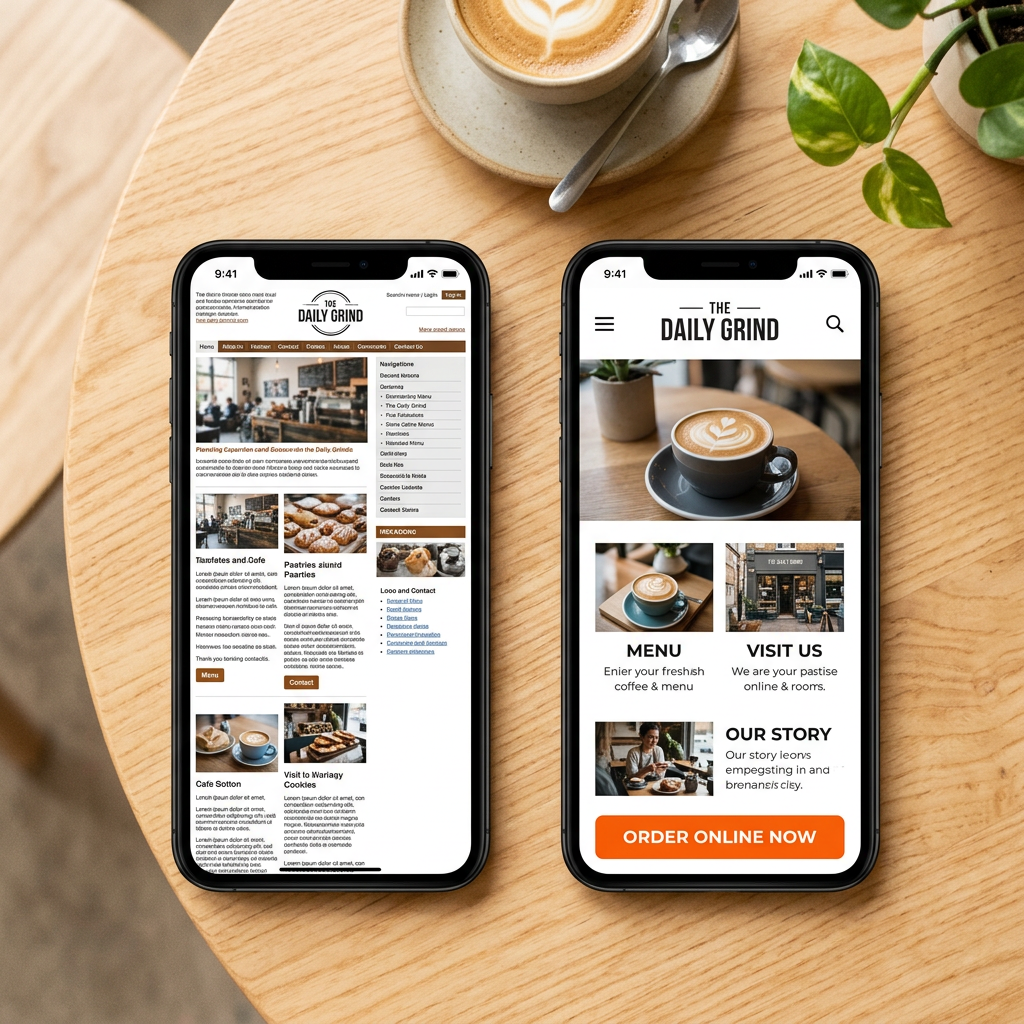
Affordable Isn't the Same as Cheap
There's an important distinction that gets lost in conversations about cost, and it's worth being direct about it.
Affordable means priced fairly for the value delivered — built to a professional standard, designed to actually produce results, and accessible to businesses that aren't enterprise clients. Affordable is a real thing, and it's what Ember Pulse Studios is built to offer.
Cheap means low price achieved by cutting corners on expertise, execution, or both. Cheap websites are cheap because something was left out — design judgment, SEO structure, conversion thinking, mobile performance, ongoing support. The low invoice reflects real omissions that will cost money in other ways.
The goal isn't to spend the least possible on a website. The goal is to spend appropriately on something that functions as a business asset — something that earns back its cost in leads and customers. A website that costs more upfront but generates two additional jobs per month pays for itself quickly and keeps paying. A website that costs less upfront but generates nothing is pure expense, no matter how low the invoice.
What "Built Right the First Time" Costs
The honest answer is: less than you think, and less than the alternative.
Ember Pulse Studios builds professional, AI-powered websites for local service businesses at a price point that's accessible to operators who aren't running enterprise organizations. Not a template you fill in yourself. Not a DIY builder with a tutorial. A complete, professional digital system built by someone who understands both the technology and the business problems it needs to solve.
Every site includes a custom AI virtual assistant trained on your specific business — your services, your service area, your pricing structure — that handles quote requests and customer inquiries around the clock. Every site is built for local search, mobile performance, and conversion. Every site comes with the expertise that makes the difference between "a website exists" and "a website works."
That's what built right looks like. It costs more than $500. It costs less than the years of invisible losses that come with the alternative.
If you're ready to stop paying the hidden cost of a website that doesn't work, let's talk. Ember Pulse Studios at emberpulsestudios.com →